Showing posts with label 無人自動車. Show all posts

Tuesday, March 5, 2013

Driverless trucks before driverless cars

As of now, driverless cars cost more than regular cars because of the additional sensors and additional computer power needed to manage all these sensor’s data. It’s clear that the added cost will dwindle during the following years as driverless cars will become more “mainstream”.

This “driverless” added cost might, soon, not be so big anyway when considering a truck driven by a professional driver.

In a 1st step, a driver will have to be present, but the driverless functionality will be a great help for him. Legally, he might even be allowed to drive longer in the day, which would improve its productivity from its employer point of view. The overall balance between cost of driverless feature and improved productivity due to assisted driving would then very soon tilt in favor of driverless trucks.

In a ultimate step (step 3), a driver might not even be needed (technically and legally). At this stage we can expect driverless functionality to be well below a truck driver’s yearly cost.

Driverless trucks are most mature in Australia mines


Before having driverless trucks on our road, they will arrive very soon or are already there in controlled environments such as mines. In these “closed” environments V2V or V2I technologies make sense as opposed to regular highway.

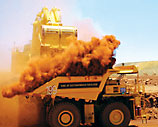
Typically in Australia where Rio Tinto is using some Komatsu’s driverless trucks and Autonomous Haulage System—Komatsu's Pioneering Technology Deployed at Rio Tinto Mine in Australia.

***


Talking about another mining project in South Australia from Iron Road Limited:
Despite all he has achieved, Mr Scholz (Wudinna’s mayor) realises without the mine Wudinna faces an increasingly difficult future. "They will have driverless tractors within 10 years and if the trend continues we won't be able to sustain our community," he said.

Truck driver might not be a job with a great future anymore.

Sunday, January 13, 2013

The revenge of faster horses


In 2012, a poll initiated by Bosch, asking about driverless cars acceptance among drivers stirred lot of comments last year: Majority of today’s drivers are not ready yet to be “driven” by automated cars.

Should this stop the effort of developing driverless cars? Probably not, if we remember 2 quotes from some famous innovators, and one from conventional wisdom:

  • Steve Jobs -- BusinessWeek, May 25 1998: "A lot of times, people don't know what they want until you show it to them."
  • Henry Ford: "If I had asked my customers what they wanted, they'd have asked for a faster horse."
  • A banker advising Henry Ford's lawyer not to invest in the Ford Motor Co: "The horse is here to stay, but the automobile is a novelty - a fad"

Maybe drivers not wanting to be driven by automated cars do not accept to just watch the car driving, but I guess most of them, will quickly find much more interesting things to do than driving, such as reading, talking on the phone, watching news... I guess no one likes to drive in traffic jams.

To reflect back on the 3rd quote, actually, “horse did stay”, except that nowadays most of the time riding horse is a leisure.

Maybe in a few decades, driving a car will be a weekend pastime only allowed on some closed loop. No one will be allowed to drive on standard road because it will be deemed much too dangerous.

Maybe, there will be more people riding horse on weekends than people driving cars. It will be then the revenge of the horse...

Wednesday, January 9, 2013

Driverless cars for the next decades in 4 steps


“Roma die uno non aedificata est” (Rome wasn’t built in 1 day)

Driverless cars will become reality during the following years or decades.

We can classify this evolution in 4 steps:

  • step 0: today’s self parking feature and Google cars
  • step 1: partially autonomous driverless cars
  • step 2: everyone can operate a driverless car
  • step 3: shared driverless cars

step 0: today’s self parking feature and Google cars

Technically cars can sometimes self drive themselves in a static environment for a reasonable price: When parking themselves. This is legally allowed worldwide because the driver still controls the speed at which self parking is occurring.

Technically cars can self drive themselves in all dynamic environments for an unreasonable price. This is legally allowed in some US states but a licenced driver needs to be present at the driving seat.

step 1: partially autonomous driverless cars

This step can be divided in several sub steps which are different only in the degree of involvement drivers will be required to have or freedom that they will have. It is the last step where technical issues are involved.


Next year’s Mercedes-Benz: having hands off the wheel for 10 seconds

Technically cars can self drive themselves in some dynamic environment for an “affordable?” price: on highways during stable conditions and in traffic jams. This may be legally allowed worldwide because the driver is allowed to not touch the steering wheel for 10 seconds maximum.

Why did Mercedes-Benz chose that the maximum allowed was 10 seconds and not 5 or 20 seconds? This question is triggering the next sub step.


1 minute (and more) free on highways and traffic jams

“How long end drivers are allowed (technically and legally) not to pay attention to road” will be the most interesting thing to watch for the next 5 to 10 years and especially:
  1. environmental conditions allowing it.
  2. the price of the technical features needed.
  3. reliability.

Driverless cars are autonomous during the entire highway part of a trip


End to end autonomous but car has both manual and self driving mode but a licenced driver is still required to be at the helm.


In the 2 last steps, no technical improvement happens anymore. These steps are about business and environmental changes.

step 2: everyone can operate a driverless car

This step will be reached when it will be not required to have a driving licence to operate a car. All technical issues have been solved.

As in previous step, maybe unlicenced driving will be allowed on some specific, secured, well known trips or when some specific conditions are met (i.e. at specific hours when overall traffic is light).

If driverless cars can be completely autonomous on all or most trips and operated by unlicensed driver, the several features of today’s cars are not needed anymore such as steering wheel, pedals, mirrors... Maybe the driving console can also disappear and the only device you need is a smartphone to enter the trip and poll the time of arrival.


step 3: shared driverless cars

Compared to previous steps, there is no technical improvement any more. Only cab companies are now allowed to own cars and have them maintained.

Shared usage step:

  • has little legal implication, except the driver becomes a mere passenger with no responsability
  • transforms the way car manufacturers, insurers, auto repairs and cab companies work and interact with each others.
  • transforms the way cities are organized

Cars are now as safe as trains. Liability has shifted from the driver to the car manufacturer. Auto insurance clients are no more end users but rather auto manufacturers, auto repair shops or and cab companies.
Parked cars no longer clutter streets and supermarkets parking lots.

You order the car you need for shopping at the local supermarket or for several hours vacation trip with the whole family.

To go shopping:
  1. A car that you ordered picks you at home and drives you to the supermarket.
  2. At the supermarket, you leave the car and it is then used by someone else or parked away.
  3. When you have finished your shopping, the same car or another ones comes picking you at supermarket exit and drives you home.

Everyone becomes James Bond in "Tomorrow never dies" where he drives a car with a remote.

Wednesday, January 2, 2013

3 driverless cars trends in 2012

To initiate the 1st post of this blog, I reviewed many news coming from the web around driverless or automated cars. I will also develop most of these trends in further blog posts during the following months.

I singled out 3 trends or hot topics of the year 2012:

  • automotive manufacturers visions.
  • end user acceptance.
  • shortly analyzing which actors are leading the driverless car effort.

Automotive manufacturers communicating on driverless cars and putting this at the center of their strategy: Volvo, Continental and Mercedes.
Their visions:

  • “no one is killed or injured in a new Volvo by 2020”
  • Continental: “will drive us toward a safer, more efficient and more comfortable future”

Safety seems to be the common denominator for automotive manufacturers to develop the driverless car technology. In a later blog post we’ll review all the possible motives for building driverless cars.

A poll initiated by Bosch, asking about driverless cars acceptance among drivers stirred lot of comments last year: Majority of today’s drivers are not ready yet to be driven by automated cars. Should this stop the effort of developing them?

Who is leading the driverless cars effort?

My feeling is that Mercedes-Benz is leading the way towards a driverless future, even more than Google and other players because next year Mercedes-Benz plans to actually sell a new S class Mercedes that allows the driver to take their hands off the wheel for 10 seconds. These 10 seconds make the difference between research and applied science for everyone (I mean, those who are wealthy enough now to buy this car).

Players are german manufacturers (Mercedes, Continental), US with Google. Volvo is also a major player. Seems that China is also doing something (Driverless car completes 114km journey from Beijing to Tianjin.). What about french, japanese and other automotive manufacturers? As of today, they don’t seem to be very active.


Update: Japanese Komatsu has some driverless trucks working in a Rio Tinto's mine in Australia.