Showing posts with label Driverless cars technology. Show all posts

Friday, May 24, 2013

Driverless tractors in 5 years in Cendrecourt

This is a response to a previous post Driverless trucks before driverless cars . A few weeks ago I was discussing with a french farmer from Cendrecourt, a village located in the east of France. He just returned from the “Salon de l’agriculture” in Paris which the big annual convention for agriculture in France. In this convention every french region is here to advertize its specialties. It’s a must for french president to come in order to “caresser le cul des vaches” which translated into upper-french means “make sure you are appreciated by farmers and that they will vote for you in the next election”.
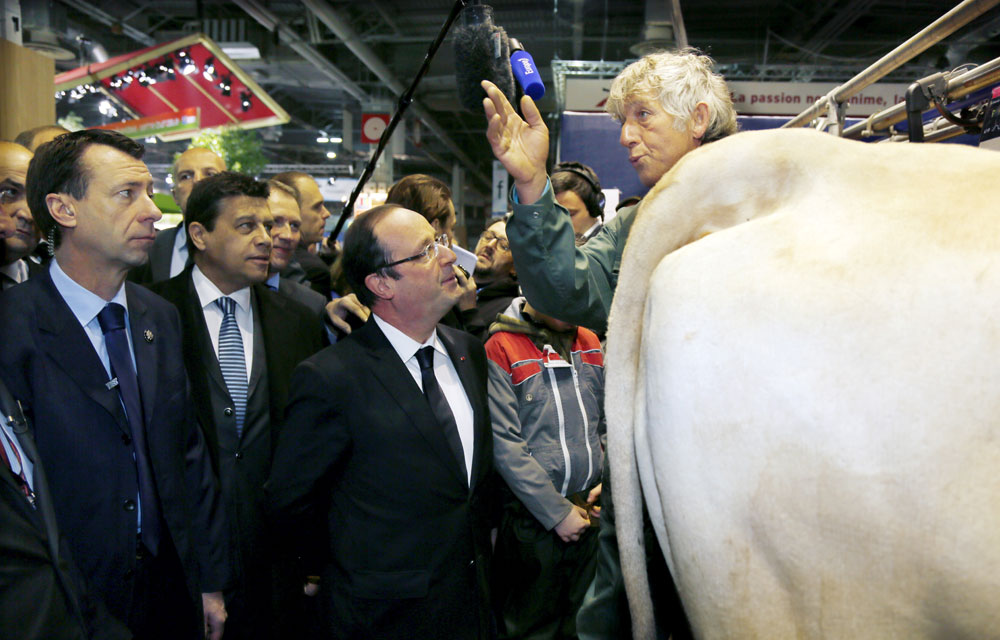

It’s also a place for companies such as John Deere to present their latest innovations. When he came back from the “Salon de l’agriculture” I asked my friend about automatization. I was already aware of machines that are completely automatizing cow milking. He thinks that in 5 years i.e. 2018, in Cendrecourt, there will be some fully automatized tractor for plowing and other tasks. In terms of using shared service, leasing and renting, most french farmers are already accustomed to this way of managing their equipment. For instance there are SLAs for most of their equipment. Most probably they will share this new driverless tractors as plowing could be done round the clock.


Farming world will jump directly to “step 3: shared driverless cars and transforming our way of life” before regular car users are still at “step 0: today’s self parking feature and Google cars”.


Note: To have a self driving tractor to autonomous plow a field, you have to do it manually once. Sometimes, depending on the soil you have to modify plowing depth when plowing a field, and you have to teach the tractor to do the same.

Note2: Driverless tractors can only operate in the same kind of “closed environment” as driverless trucks in mines
Tuesday, March 5, 2013

Driverless trucks before driverless cars

As of now, driverless cars cost more than regular cars because of the additional sensors and additional computer power needed to manage all these sensor’s data. It’s clear that the added cost will dwindle during the following years as driverless cars will become more “mainstream”.

This “driverless” added cost might, soon, not be so big anyway when considering a truck driven by a professional driver.

In a 1st step, a driver will have to be present, but the driverless functionality will be a great help for him. Legally, he might even be allowed to drive longer in the day, which would improve its productivity from its employer point of view. The overall balance between cost of driverless feature and improved productivity due to assisted driving would then very soon tilt in favor of driverless trucks.

In a ultimate step (step 3), a driver might not even be needed (technically and legally). At this stage we can expect driverless functionality to be well below a truck driver’s yearly cost.

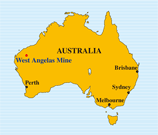
Driverless trucks are most mature in Australia mines


Before having driverless trucks on our road, they will arrive very soon or are already there in controlled environments such as mines. In these “closed” environments V2V or V2I technologies make sense as opposed to regular highway.

Typically in Australia where Rio Tinto is using some Komatsu’s driverless trucks and Autonomous Haulage System—Komatsu's Pioneering Technology Deployed at Rio Tinto Mine in Australia.

***


Talking about another mining project in South Australia from Iron Road Limited:
Despite all he has achieved, Mr Scholz (Wudinna’s mayor) realises without the mine Wudinna faces an increasingly difficult future. "They will have driverless tractors within 10 years and if the trend continues we won't be able to sustain our community," he said.

Truck driver might not be a job with a great future anymore.

Thursday, January 17, 2013

Do driverless cars need V2V communication?

Several car manufacturers work on driverless cars. They explore some different ways of doing it. Volvo is one of the most advanced exploring V2V technology. V2V is an acronym for vehicle-to-vehicle communication. It’s about using some dynamic vehicle to vehicle wireless communications to have cars get extra informations from neighbour cars or from sensors on the road itself.

But Do driverless cars need V2V communication?

To establish communication, you need to be at least 2 and share a common way to communicate. There are plenty of road stakeholders with which V2V communication will not be possible. Even if all vehicles shared the same way of communicating, the wild boar crossing the road in front of your car will not be able to communicate with your driverless car, at least not in a wireless way.


And as a matter of fact, today, most the google car and the soon to be released new Mercedes do not rely on V2V but only or mostly on their sensors.

If V2V is to have a future, a standard has to be established as soon as possible, so all vehicle from different manufacturers can communicate between themselves. Why not making it a “chapter” of AUTOSAR?

But my guess, is that by the time a common V2V protocol is established, most driverless cars will be able to drive completely autonomously, and V2V won’t bring anything to the driverless cars world. Sensors such as cameras, lidars and others will do the job anyway.

My feeling is that V2V for driverless cars is a dead end.

But in a constrained limited environment like a factory or on airport premises, this can be a good solution. V2V would be not between vehicles but rather between vehicles and specially equipped roads with wireless beacons (called V2I Vehicle-to-Infrastructure).

Tuesday, January 1, 2013

Driverless Cars Blog Presentation


I don’t like cars and I usually hate driving, that is why I am passionate by cars and I even work in automotive industry.

I now own a Dacia Sandero that I have to drive from my 300 inhabitants (150 cows and 150 people) mountain hamlet. This is important because, I am constantly relating the driverless car effort to how my daily life could look like when being driven by an automated car.

This blog will features articles about a breakthrough automotive innovation currently ongoing: driverless cars. This blog will deal with driverless cars from multiple angles as driverless cars will not only change the way most human being experience travelling, but will also have tremendous side effects on cities, countryside and business.

Here is a non exhaustive lists of possible way to deal with driveless cars, each linked to a keyword:


About me

I Eric Mariacher, am an average driver, who is longing for driverless car to unload me for the driving task that I don’t especially appreciate. I work as an engineer in embedded software in the automotive area. A few years ago I was involved in major embedded software automotive effort of standardization: AUTOSAR. I also widened my experience by working,as a consultant or employed, in other embedded software fields such as telecommunication, consumer electronics and medical devices.